Australian law firms are leaving money on the table. Seventy-three percent of legal consumers start their search online, yet most firms still rely on referrals and hope that SEO magically fills their pipeline. The firms winning right now are the ones combining traditional reputation with precise digital marketing. Meta Ads, paired with authentic case study video content, offers an uncommon edge: the ability to reach high-intent prospects before they decide to call anyone else.
The challenge isn’t getting visibility. It’s getting the right visibility to the right people at the right stage of their decision. Broad professional targeting on Meta doesn’t work. Generic law firm messaging drowns in the feed. But case study videos showing real client outcomes, run through strategically segmented Meta campaigns, create the proof potential clients need before they book a consultation.
This is not a generic guide to Facebook ads. This is how Australian law firms use authentic video storytelling and Meta’s targeting precision to turn high-intent prospects into consultation bookings without overspending on audience segmentation.
Why Video Case Studies Outperform Everything Else on Meta
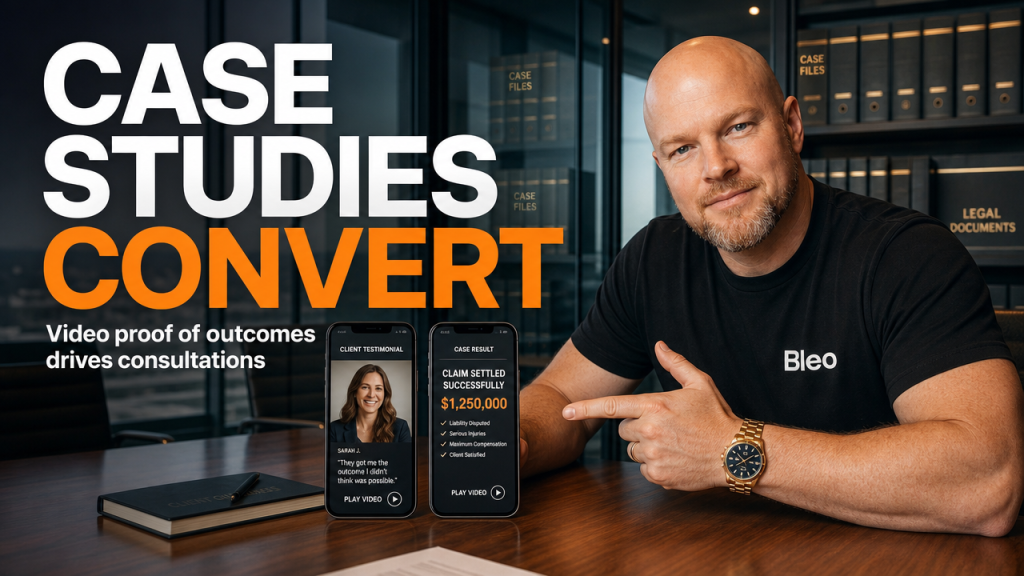
Static images don’t tell a story. A testimonial quote on a blue background looks like every other law firm ad in the feed. Video stops the scroll. Video builds recall. Video creates emotional connection. And for law firms, video case studies do something even more powerful: they prove outcomes.
When a potential client sees a real client on video explaining how your firm resolved their legal problem, something shifts. The prospect moves from “I’m interested” to “I believe this firm can help me.” That’s the difference between a lead and a consultation booking. According to recent data, while static images still drive approximately 60-70% of conversions on Meta, video content captures attention and builds brand recall more effectively. For law firms, this might include partner introductions, client testimonial compilations (with appropriate consent), or educational content addressing common legal questions.
The Power of Outcome-Focused Storytelling
The best case study videos don’t start with your firm. They start with the client’s problem. A real client sits in front of the camera and explains the situation they were in before they hired your firm. Then they talk about the result. Then they share how working with your firm made a difference in their life.
This isn’t marketing. It’s proof. And when that video runs on Meta to people searching for terms related to their legal issue, the conversion rate climbs. Australian law firms are seeing consultation booking rates that would be impossible with static creative alone.
Video Performs Best on Stories and Reels
Not all video formats perform equally on Meta. Video performs especially well on Stories and Reels. These formats are designed for short-form, mobile-first viewing. A 30-second to 60-second case study snippet works perfectly here. The vertical format matches how people naturally hold their phones. The autoplay default means your video starts playing the moment someone scrolls into it.
Your 15-second case study excerpt, running as a Reels ad to the right audience, will generate more consultation bookings than a 2-minute partner biography video running as a standard Feed ad. Keep it short. Keep it vertical. Keep it outcome-focused.
How to Segment Your Meta Campaigns for Maximum Intent Matching
Here’s where most law firms waste money. They create one campaign called “Personal Injury Leads” or “Family Law Enquiries” and let Meta’s algorithm decide who sees the ad. Then they wonder why the lead quality is low and the consultation booking rate is terrible.
The algorithm does its job. It optimises for conversions. But it optimises based on whatever conversion signal you define. If you tell it “a conversion is anyone who clicks the lead form,” it will find you lots of people who click lead forms. Not all of them are actually ready to book a consultation. Many are tire-kickers. Some are calling competitors. The algorithm has no way to distinguish.
The solution is segmentation. Create separate campaigns for different intent stages and different audience types. Not because Meta can’t handle multiple audiences in one campaign, but because different creative and different messaging work for different people.
Segment by Intent: Cold, Warm, and Hot Audiences
Cold audiences have never heard of your firm. They might be searching for legal information or discussing their problem on Facebook. You’re introducing yourself. Your message should focus on trust, expertise, and the specific practice area. A 30-second case study video works. The client explains the problem, mentions the outcome. Your firm branding appears. That’s it. No hard sell. The goal is awareness and consideration, not immediate consultation booking.
Warm audiences have visited your website or engaged with your content. They know you exist. They’re comparing you with other firms. Your message should deepen trust and demonstrate specialisation. Show a case study that directly addresses the type of legal issue they’re researching. Let them see the outcome. Mention the specific expertise your team brings. The call-to-action can be slightly stronger here: “Book your free consultation.”
Hot audiences are actively considering your firm. They may have been to your website multiple times, watched your videos, or downloaded your guides. They’re ready to talk. Your message should focus on reassurance and friction removal. A short client testimonial video works perfectly. Make booking a consultation effortless. Lead ads on Meta pre-fill contact information from the user’s Facebook profile. No form-filling friction. Just a conversation.
Segment by Practice Area and Service Type
Personal injury ads should not run to family law prospects. Estate planning ads should not run to corporate clients. Each practice area has different pain points, different client archetypes, and different decision-making timelines. Your case study video for a successful personal injury settlement will not convert someone researching family law options.
Create separate campaigns for each significant practice area. Run the case study video most relevant to that area. Let the targeting precision work in your favour. You’ll see higher click-through rates, lower cost-per-lead, and most importantly, higher consultation booking rates because the person seeing the ad is actually in the market for that specific service.
Segment by Geographic Area (If Applicable)
If your firm operates in multiple states or territories, or has different office locations, segment by geography. A potential client in Brisbane does not need to see a case study from your Melbourne office. They want to work with the team in their city. Meta’s geographic targeting is precise and reliable. Use it. Build local authority by showing local case studies and local team members. The conversion uplift is measurable.
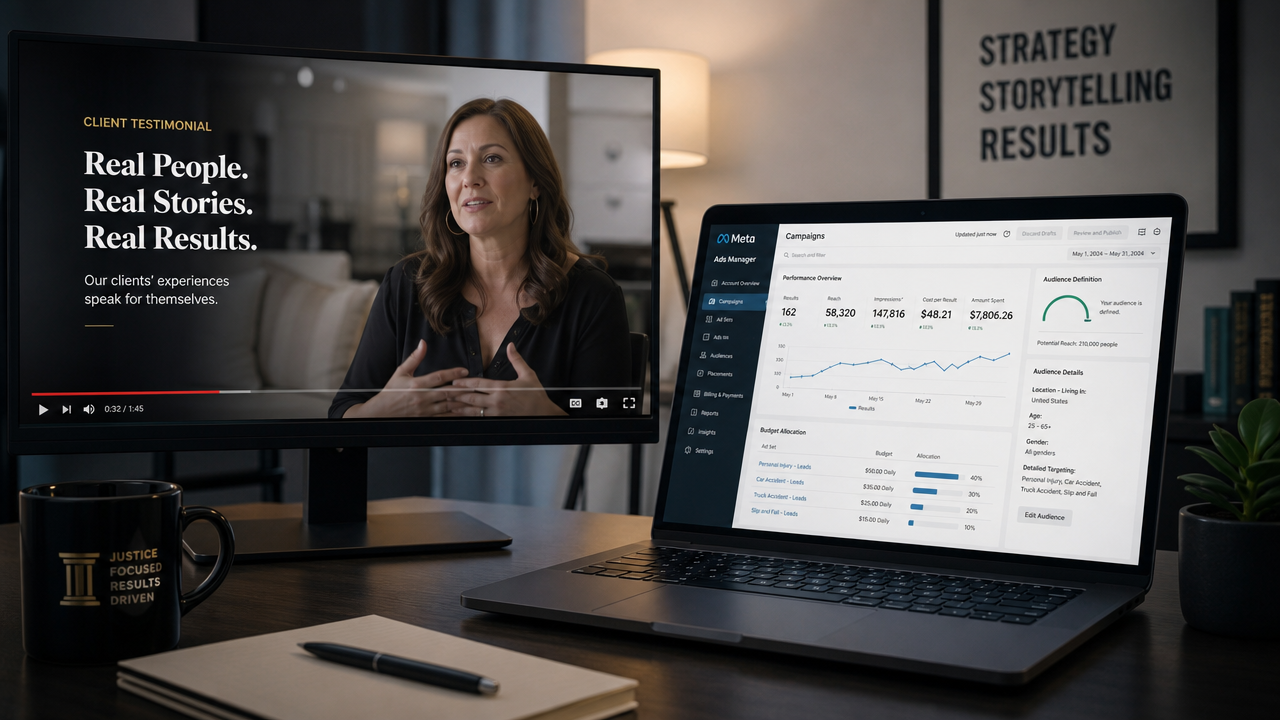
The Technical Setup: Tracking, Pixels, and Lead Quality
Creative matters. Targeting matters. But if you can’t measure what’s actually happening, you’re flying blind. Many Australian law firms run Meta campaigns, generate leads, but have no idea which leads actually convert to consultations or which ones are wasting intake team time.
The fix is proper tracking infrastructure. Implement Meta Pixel on your website and configure key conversion events. Track “consultation booked,” not just “form submitted.” When someone books a consultation through your website form, that’s a conversion event Meta should know about. The algorithm learns from this signal. It finds more people like the ones who actually book consultations, not just people who click ads.
Connect your CRM to Meta if possible. Rank-and-file leads that actually turned into clients. Mark leads that were disqualified. This closed-loop tracking is where the real learning happens. Meta’s AI algorithm, Andromeda, uses this data to identify people in its entire user base who look like the prospects most likely to book consultations with your firm, even before those people search for legal services explicitly.
Most law firms implementing this see measurable improvements within 60-90 days. But the timeline is important. Don’t expect immediate perfection. Budget for continuous creative production during that entire window. A single case study video concept fatigues quickly on Meta. You need variety. Different client stories. Different practice areas. Different creative angles. Fresh material tells the algorithm you’re serious about the channel and gives it new audiences to test.
Compliance and Lead Quality Management
Australian legal advertising is regulated by state Law Societies and the Legal Profession Uniform Law. Always check your state’s Legal Services Council guidelines before launching campaigns. Key rule: advertising must not be false, misleading, or deceptive. Your case study videos must be authentic. Client testimonials must have appropriate consent. Don’t fabricate outcomes.
Beyond compliance, implement post-lead qualification systems. Running Meta ads and generating leads is one thing. Having your intake team manually call through 50 unqualified leads is another. Many Australian law firms see high lead volume on Meta but struggle to convert those leads to consultations because the quality is mixed. Use lead qualification workflows, phone intake screening, or automated follow-up sequences. Identify true high-intent prospects and route them to your team quickly.
Quick Wins: 6 Practical Actions to Start This Week
- Audit your existing case studies. List three to five recent client matters where the outcome was strong, the client is willing to be featured, and the case type represents your target market. These are the foundation of your case study video library. Without them, you have nothing to advertise.
- Film at least two case study videos. You don’t need a Hollywood production. Authentic matters. Sit your client (with written consent) in front of a camera, ask them three simple questions: “What was your situation before you called us?”, “What was the result?”, “How has this helped you?” Record it. You now have a case study video ready for Meta.
- Segment your current Meta campaigns by practice area. If you’re running one broad “Law Firm Leads” campaign, break it into separate campaigns for each major practice area (family law, personal injury, wills and estates, corporate, etc.). Assign the most relevant case study video to each. Monitor performance separately.
- Implement Meta Pixel tracking for consultation bookings. Set up a custom conversion event for “consultation booked.” Don’t settle for “form submitted.” Train the algorithm to optimise for people who actually book calls, not just form-clickers.
- Run a 60-90 day test campaign with realistic budget. For most Australian law firms, this means AUD 800-1,200 per month per practice area. Set clear benchmarks: cost-per-lead, lead-to-consultation conversion rate, and cost-per-consultation-booked. This is where your actual ROI lives.
- Schedule a creative refresh every quarter. New case study videos, new messaging angles, new practice area focuses. Your audience will see the same ads fatigue quickly. Variety keeps the algorithm engaged and keeps your audience interested.
So, What Now?
Australian law firms spend significant budgets on digital marketing. Many of those budgets are split between SEO, Google Ads, and social. But the firms generating the most consultation bookings per dollar are the ones who’ve mastered Meta Ads paired with authentic case study video content. The combination works because it addresses the entire client journey: awareness (cold audiences see your case study and recognise they have a legal problem), consideration (warm audiences compare you with other firms based on outcomes), and decision (hot audiences see proof and book a consultation).
You don’t need to be an advertising expert. You don’t need a massive creative team. You need authentic client stories, strategic audience segmentation, proper tracking, and the patience to let the algorithm learn what works. Start with case study videos. Build your creative library. Segment your campaigns by practice area and intent. Track consultation bookings, not just form submissions. Run the test for 90 days. The results will show you whether Meta Ads belong in your marketing mix.
Ready to turn high-intent legal prospects into consultation bookings? Bleo’s digital marketing strategy for law firms combines video case study production with Meta Ads campaign management, designed to generate qualified leads at a predictable cost per consultation. Let’s discuss how case study videos can work for your practice.