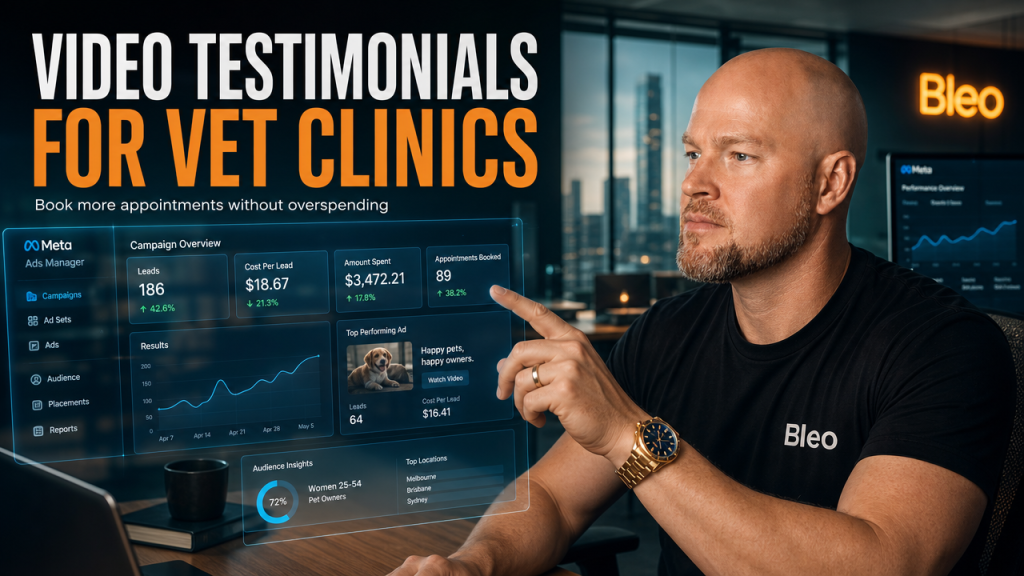
Every Australian veterinary clinic faces the same challenge: how to fill appointment slots without burning through the marketing budget on ads that reach people who’ll never book a service. The problem isn’t a shortage of pet owners willing to spend. It’s that broad, generic audience targeting on Meta Ads wastes money fast, while strategic, focused campaigns deliver real results.
The shift toward video testimonials and educational pet health content isn’t a trend. It’s now the baseline for clinics that convert prospects into paying clients. Authentic, phone-recorded testimonial videos outperform polished, studio-produced content by 44% in click-through rates, and Meta’s algorithm rewards this difference heavily.
This guide shows you exactly how to build Meta Ads campaigns that generate appointment bookings without overspending on broad targeting. We’ll cover which creative formats work, how to structure your funnel for maximum conversion, and the specific audience segments worth your ad budget.
Why Video Testimonials and Educational Content Outperform Everything Else
Pet owners decide on a new veterinary clinic based on trust, and trust comes from seeing real people and real pets thrive under your care. Creator-style talking head testimonials are strongest for awareness and consideration, representing 40% of the recommended creative mix for Meta campaigns, while product demonstration UGC makes up 25%, before-and-after transformation content comprises 20%, and trend-based format-native content accounts for 15%.
Why? Because pet owners don’t scroll past their feeds looking for sleek corporate videos. They’re looking for reassurance. A satisfied client saying “Dr Sarah fixed my dog’s arthritis and he’s running again” carries more weight than a dozen polished ads claiming clinical expertise. Educational content serves a dual purpose: it builds trust with cold audiences while positioning your clinic as the authority in your area.
The Trust Factor: Why Testimonials Convert
When prospects see real pets recovering from health issues and real owners expressing gratitude, objections dissolve. Your testimonial library becomes your competitive moat, because clinics with authentic client stories dominate the conversation on Meta. Social-native creative, which looks least like a traditional advertisement and feels like organic user content rather than produced brand material, outperforms polished brand creative in scroll-stopping rate, view-through rate, and often in direct conversion rate for lower-consideration purchases.
Start by collecting 5-10 short video testimonials from satisfied clients. Phone-recorded content shot in the clinic or the client’s home is gold. Avoid scripting. Just ask owners why they chose your clinic and what difference you made. This becomes your creative foundation.
Educational Content: The Lead-Generation Engine
Educational posts about pet health, seasonal care tips, and common concerns drive visibility and signal expertise. Posting pet health and wellness tips and answering common questions with useful information that pet owners genuinely need builds engagement. These posts also improve your organic reach, which lowers your paid acquisition cost by warming the audience before they even see your ads.
Practices that publish educational content such as seasonal health tips or breed-specific guides see session durations closer to 3 minutes, meaning people spend more time on your website understanding your value. That engagement signal boosts your ad performance later.
Why Video Dominates the Meta Algorithm
Advertisers using video across all stages see 30 to 50% lower CPCs than image-only campaigns. Meta’s Andromeda algorithm prioritises video because it knows users engage longer with video than static images. For veterinary clinics, that means your testimonial library isn’t just trust-building - it’s your ticket to lower acquisition costs.
How to Structure Your Meta Ads Funnel for Veterinary Appointment Bookings
Appointment booking is a lower-commitment conversion than an e-commerce purchase, which means your funnel can be leaner. But structure still matters. A veterinary clinic’s Meta Ads should work in three clear stages, each with a different creative approach and objective.
Stage 1: Awareness (Top of Funnel)
Your goal here isn’t clicks; it’s to introduce your clinic to pet owners who haven’t heard of you yet. Use educational content and behind-the-scenes footage to show your team, your facilities, and your approach to pet care. Post photos of cute animals, your team in action, your facilities, before-and-after treatment photos or happy pet photos, and videos showing facility tours or behind-the-scenes glimpses help build trust and familiarity.
Set your campaign objective to “Reach” and let Meta’s algorithm do the distribution. You’re not paying for clicks here; you’re paying to get in front of the right people. 15-30 second videos achieve the highest ThruPlay rates in 2026, with 15-second videos averaging 28% ThruPlay rate vs 19% for 60+ second videos. Keep top-of-funnel videos short and hook them in the first three seconds.
Stage 2: Consideration (Middle of Funnel)
Now introduce your testimonials and case studies. Pet owners are narrowing their choices, so they need proof. Show real clients and real results. You can also answer frequently asked questions about services like dental care, vaccinations, or surgery recovery in short video format.
At this stage, use carousel ads or video ads with a clear call-to-action pointing to your clinic’s website or booking page. For lead generation, use the Lead Ads objective at TOFU, retarget video viewers with testimonial content at MOFU, and serve time-limited offers or free trials at BOFU. Your audience here is already warm, so testimonials perform exceptionally well.
Stage 3: Conversion (Bottom of Funnel)
This is where you push for the booking. Retarget people who’ve visited your website, watched your testimonial videos, or engaged with your educational posts. Use specific incentives: “New Client Dental Exam 50% Off” or “Free Comprehensive Health Check for Your Pet’s First Visit.” Provide special discounts or deals to followers to incentivise bookings, such as ‘New Client Dental Exam 50% Off’ or ‘Free Heartworm Test with Annual Wellness Visit’ to drive conversions.
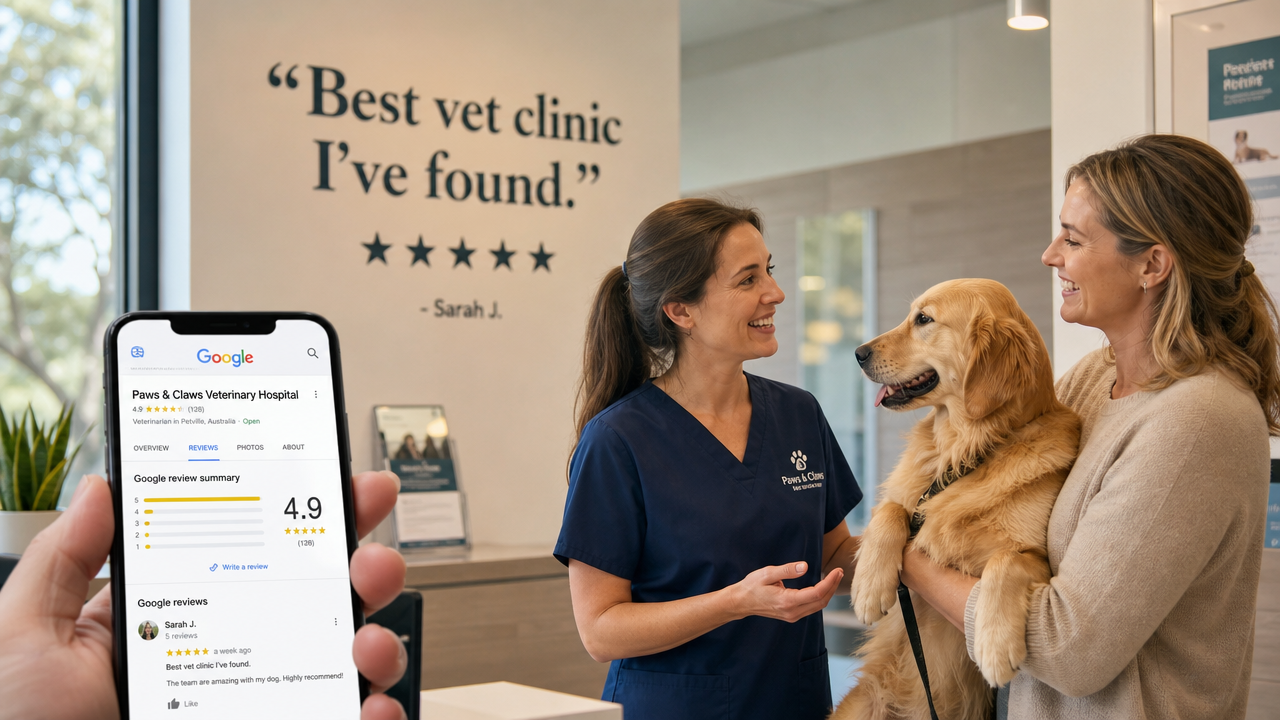
A dedicated landing page with a video testimonial above the fold and review widget visible achieved 5.7% conversion rate compared to 1.2% for a generic homepage as destination. Your ad is only as good as the page it sends traffic to, so make sure your landing pages feature testimonials, reviews, and a frictionless booking form.
Avoiding the Broad Targeting Trap: Who Actually Books Vet Appointments
The biggest mistake veterinary clinics make is setting broad audience targeting and hoping the budget stretches. It doesn’t. You end up showing ads to people who’ll never need your services or who prefer competitors across town.
Andromeda analyzes over 40 behavioral signals to identify high-intent pet owners, studying purchase history, engagement with pet-related content, location patterns, and seasonal behavior changes, and can identify dog owners who typically book every 6-8 weeks and surface ads precisely when they’re due for their next appointment.
Instead of broad targeting, build specific custom audiences and lookalike audiences from your existing client list. People who’ve already booked with you are your best reference point for finding similar pet owners in your area. Use location targeting tightly (5-15km radius depending on your market), and focus on pet owner interest segments rather than general demographics.
Targeting Precision Over Reach
Narrow down your targeting to pet owners in your service area who’ve shown interest in pet health, veterinary services, and wellness. Meta allows you to layer interests, behaviours, and custom audience combinations. A 1,000-person highly relevant audience will outperform a 50,000-person broad audience every single time.
For Australian veterinary clinics, mobile optimisation is non-negotiable. Any veterinary practice without a mobile-optimized site is losing the majority of its potential traffic before a single word is read. Pet owners search on their phones during emergencies or after noticing something wrong with their pets. Make sure your booking page loads in under two seconds and works flawlessly on mobile.
The Speed-to-Lead Rule
Speed is key in lead response, replying within five minutes improves lead qualification rates by 78%. If someone fills out a booking form from your Meta ad, follow up immediately. This isn’t just good customer service; it’s an algorithmic signal. Meta’s system tracks which ads lead to real conversions and optimises toward them. Slow follow-up breaks that feedback loop.
Quick Wins: Practical Steps to Launch Your Campaign This Week
- Collect and Produce Testimonial Videos: Ask 5-10 satisfied clients to record short phone videos (30-60 seconds) about their experience. Focus on the problem they faced, how you solved it, and the outcome. These become your creative foundation for the next 3-6 months.
- Build Your Audience Segment: Export your existing client list and upload it as a custom audience to Meta. Create a lookalike audience from this list (start with 1% lookalike, then expand to 5% if budget allows). This is your warmest cold audience.
- Set Up a Dedicated Landing Page: Don’t send traffic from ads to your homepage. Create a simple landing page with one of your best testimonial videos at the top, a review widget, and a single call-to-action button linking to your booking system. Test this page with your team first to ensure the booking flow is smooth.
- Start with Lead Ads (Not Website Clicks): Use Meta’s Lead Ads objective to collect appointment requests directly in the Facebook app. Facebook’s in-app lead forms reduce the average cost per lead for small businesses to $8.20. No friction, no clicks to your site, no bouncing.
- Plan Your Content Calendar Around Seasons and Health Trends: Schedule educational posts about flea season, vaccination reminders, dental health in spring, and end-of-year wellness checks. Schedule seasonal campaigns around flea season, vaccination reminders, and holiday pet safety, and practice management systems can automate much of this delivery once messaging is mapped out.
- Implement Conversions API (CAPI): Make sure your Meta Pixel is connected to your booking system, and if possible, implement Conversions API to track offline conversions (completed appointments). For Meta Ads conversion campaigns, the practical impact of implementing CAPI is improved conversion matching rates, more accurate frequency and attribution reporting, better-informed Advantage+ optimization, and ROAS figures that reflect reality.
So, What Now?
Meta Ads work brilliantly for veterinary clinics, but only when you stop trying to reach “everyone” and start reaching the right people with the right message. Video testimonials, educational content, and tight audience targeting create a self-reinforcing engine: lower acquisition costs, higher conversion rates, and a sustainable stream of new clients.
The clinics winning right now are the ones treating Meta Ads as a strategic tool, not a spray-and-pray channel. If you’re running generic ads to broad audiences and wondering why your cost-per-booking keeps climbing, it’s time for a strategic reset. Bleo’s digital marketing team specialises in service-based campaigns for Australian clinics and practices. We audit your current spend, identify waste, and restructure your funnel to deliver bookings, not vanity clicks.