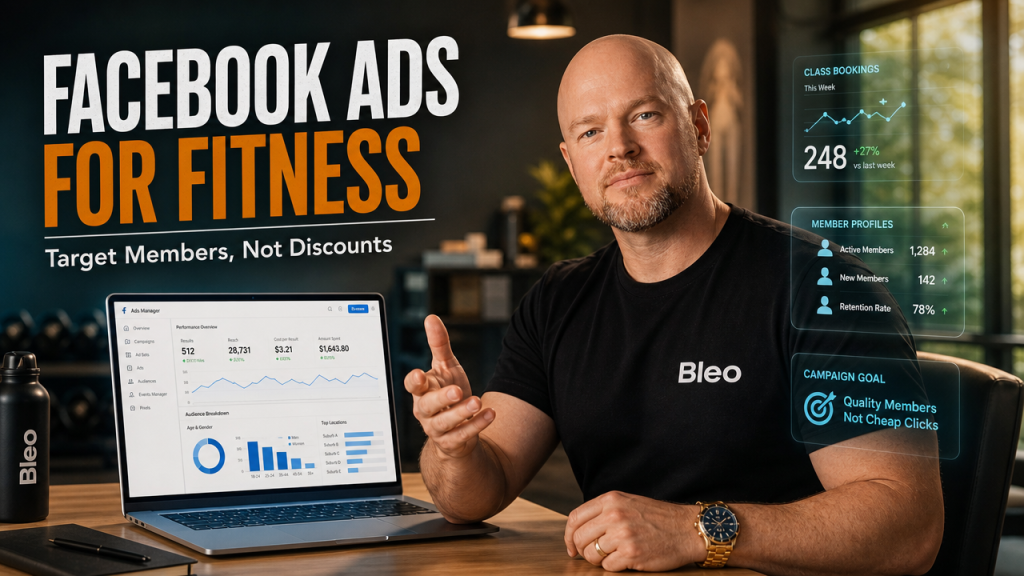
Fitness studios across Australia face the same pressure: fill classes without bleeding margin on discount offers. The race to the bottom rarely ends well. Your real advantage isn’t a cheaper intro rate - it’s reaching the right person at the right moment and showing them why your studio is worth full price.
Facebook and Instagram ads are built for this. When you target health-conscious members by behaviour and interest rather than chasing bargain hunters, you attract people who value quality over cost, commit longer, and show up consistently. The difference between a discount-driven campaign and a membership-driven campaign often comes down to how you set up your targeting and what you ask people to do.
Australian fitness studios that skip Facebook ads entirely or run generic campaigns are leaving money on the table. Those who master the platform are filling classes, raising member satisfaction, and protecting margins. Here’s how to do it right.
How Facebook Ads Work for Fitness Member Acquisition
Facebook is not a billboard. It’s a precision tool. Facebook is the most targeted form of advertising, allowing you to pinpoint your audience, which is especially useful for gyms and fitness studios. Among all industries, Facebook ads have the highest conversion rate for the fitness industry at 14.29%, while the average is 9.21%. That gap exists because fitness prospects self-select: they’re actively thinking about health, searching for solutions, and ready to commit.
The platform works on a Pay Per Click (PPC) model, meaning you pay only when someone engages. Paid advertising enables you to target specific audiences based on things like demographics, interests, behavior, and location. A studio in Brisbane can reach 25-40-year-olds within 10km who follow fitness influencers. A Sydney yoga studio can target people who’ve engaged with meditation or wellness content. A Melbourne Pilates gallery can narrow to professionals earning above a certain threshold who value premium experiences.
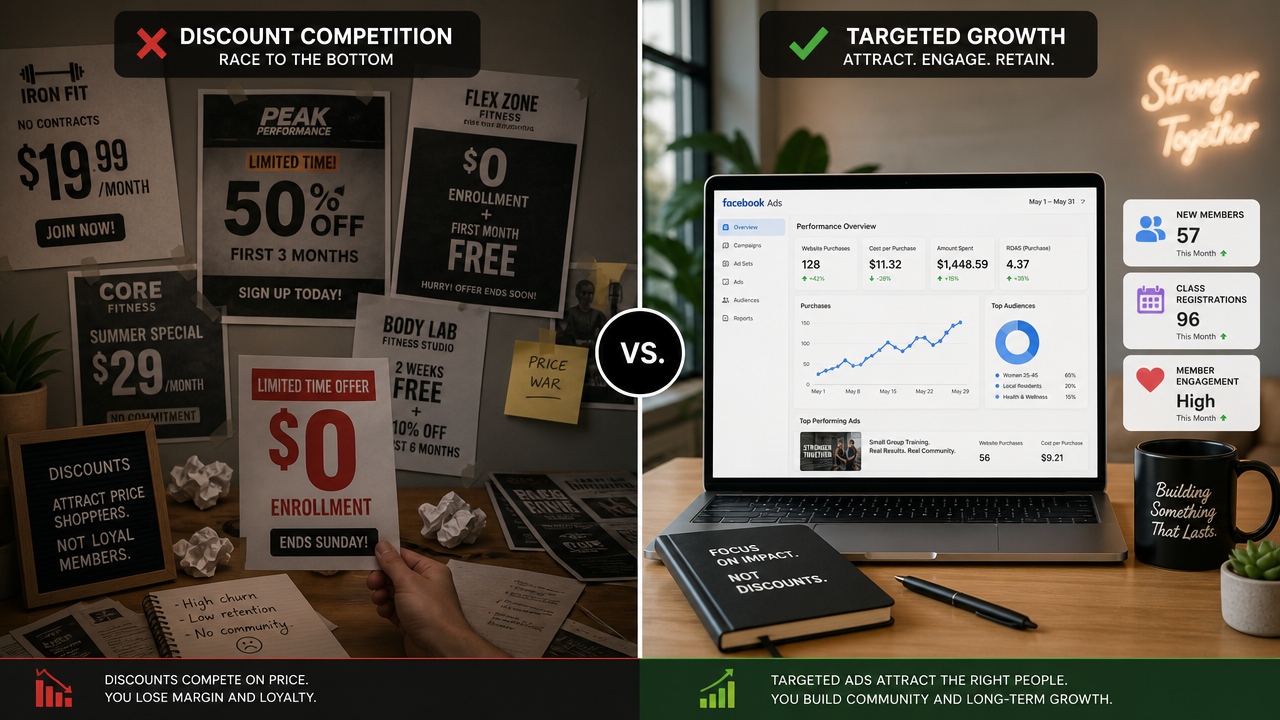
This precision is why discount ads and full-price ads perform so differently on the same platform. Discount ads attract price shoppers. Targeted, value-focused ads attract members who stay.
Why Fitness Audiences Convert Differently
People searching for fitness solutions are often ready to buy. Conversion rates for well-targeted fitness ads consistently outperform general consumer goods. Unlike ecommerce or SaaS, fitness has a tight decision window. Someone interested in yoga doesn’t browse for three months. They’re usually ready to trial a class within days.
However, there’s a cost: Creative fatigue is fast. Fitness audiences see a high volume of ads. Creative refresh cycles need to be shorter (7-14 days vs. 30+ days in less saturated verticals). You need fresh creative every one to two weeks, not just set-and-forget campaigns.
The Key Benchmarks to Monitor
Cost per lead for gyms should target between $5-15 for local gyms, $15-30 for premium studios. Frequency should be kept below 3 for prospecting, below 6 for retargeting. When CTR drops 30% from launch performance, refresh the creative. Premium studios (boutique Pilates, high-end yoga, personal training focused) sit at the higher end because members expect premium experiences and are willing to pay for them.
These benchmarks aren’t targets you must hit - they’re guardrails. If your cost per lead is $45, you’re overspending or targeting too broadly. If your frequency is above 6 and people haven’t converted, they’re likely tuning out your ads.
The Real Opportunity: Behaviour-Based Targeting
Meta’s algorithm can reach people most likely to benefit from fitness services, including: Gym Newbies (individuals looking for their first gym membership), Yoga Lovers (people in your area actively searching for mindfulness and wellness opportunities), and Fitness Enthusiasts (those already passionate about fitness but curious about what makes your studio unique). These aren’t assumptions - Facebook tracks actual behaviour: app usage, content engagement, search history (via partner data), and purchase patterns.
The studios that stop competing on price are the ones that layer targeting: they reach fitness enthusiasts (not bargain hunters), narrow by location, layer in life stage (new parents, busy professionals), and exclude people who’ve already visited and didn’t convert. One Sydney Pilates studio we’ve worked with went from $35 cost per trial to $16 by removing people under 30 and above 55, narrowing location to three suburbs, and excluding people who’d already seen the ad four times without engaging.
Building a Fitness Campaign That Sells Membership, Not Discounts
The mechanics of setting up a Facebook campaign are straightforward. The strategy underneath - what you ask people to do, what story you tell, who you exclude - is where studios either nail it or spin their wheels spending money for the wrong type of leads.
Step 1: Start with the Offer, Not the Channel
The offer is the ad. The single biggest lever in fitness marketing on Meta is not creative, not targeting, and not budget. A “Free Trial Week” attracts different people than “First Month 40% Off.” A trial focuses on experience; the discount attracts price hunters. If you want members who stay 12 months, lead with the experience. A Melbourne-based boutique fitness studio tested “Free Week + Complimentary Technique Session” versus “First Class Free” and saw 60% higher retention from the technique session group - because it signalled expertise, not desperation.
Your offer should feel premium. If you’re competing on price, you’ve already lost. Instead, compete on access, community, results, or expertise. “Get a custom starter plan before your first class” works. “Free week if you book before Friday” works. “$20 for your first month” does not.
Step 2: Show Real Transformation, Not Stock Photos
Fitness audiences see thousands of ab shots and sunset yoga poses per month. Before and after stories using specific, named, real member transformations work best. “Sarah lost 18 pounds in 10 weeks with our Tuesday/Thursday/Saturday program.” Not stock photos. Not vague “amazing results.” Real people from your actual community. A Queensland yoga studio that switched from aspirational imagery to member testimonials (filmed on an iPhone, unpolished, real) cut their cost per lead in half.
Process content also works: show what a typical class looks like, how onboarding works, what the space feels like. Answer the hidden question every prospect has: “What does it actually feel like to be there?”
Step 3: Use Life Stage and Location to Narrow Down, Not Expand
Most studios target too broadly: “anyone interested in fitness in a 15km radius.” That includes people with a home gym habit, CrossFit die-hards, and discount chasers. Instead, layer: fitness interest AND yoga interest (not gym interest). Location within 5km (not 15). Age 28-50 (not 18-65). Exclude people who’ve seen the ad multiple times without clicking. Each layer makes targeting tighter and cost per lead lower.
A Brisbane studio serving busy professionals, not beginners, doubled down on targeting: professionals earning over $75k, interested in wellness and stress relief, within 3km of the studio, aged 35-55, and excluded anyone who’d scrolled past the ad three times. Cost per trial dropped 35%, and retention went up because the members actually valued the studio’s premium positioning.
Step 4: Don’t Ask People to Choose - Make Booking the Obvious Next Step
Show people what they gain by working with you - whether it’s confidence, results, community, or convenience - and direct them to take the next step such as booking a free trial or claiming a special offer. A clickable booking link (straight from the ad to class availability or trial sign-up) beats a “click here to learn more” button. If you make people land on your website and then search for booking, you lose 40% of them.
Make the friction minimal. A text message with the booking link works. A landing page with one form field (name or email) works. Sending them to a 15-question fitness assessment does not.
Key Compliance and Performance Notes for Australian Studios
In January 2025, Meta introduced new advertising restrictions for companies in the Health and Wellness category. At first glance, these updates seemed to target mostly consumer-facing wellness brands - like supplement companies and fitness products - but they’re part of a broader healthcare privacy initiative that will continue rolling out through 2026. For fitness studios specifically, the good news is straightforward: The age targeting restrictions don’t apply to ads that promote or sell fitness services and equipment, and health clubs.
However, avoid aggressive language. Ads cannot make direct promises to cure, treat, or prevent diseases. Furthermore, Meta frequently flags ads that use overly clinical language or guarantee specific health outcomes. The winning strategy here is education. Say “Find your fitness routine” or “Join a supportive community.” Don’t say “Lose weight fast” or “Transform your body in 8 weeks.”
For Australian studios: Facebook ads have the highest conversion rate for the fitness industry at 14.29%. That’s your target benchmark. If you’re running a campaign above $25 cost per trial, audit your targeting and creative. If you’re below $15, you’re likely too narrow or your offer isn’t clear enough to justify the cost.
Quick Wins: 5 Immediate Actions to Improve Your Facebook Ads
- Audit your current targeting. Pull your last three months of ad performance. If you’re seeing cost per lead above $25, you’re likely targeting too broadly or attracting the wrong audience. Layer in a secondary interest (e.g., yoga + wellness, not just fitness) or narrow location to your 3km sweet spot.
- Replace one discount ad with a value ad. Test “Free Week + Personalized Starter Plan” against your current offer. Track which brings higher-quality leads (those who show up, stay longer, refer others). Most studios find the value-focused ad converts equally or better.
- Refresh creative every 10 days. Record a new class snippet, film a member testimonial on your phone, or create a process video (onboarding, a typical class, community vibes). Fitness audiences spot stale creative immediately.
- Test a booking-link campaign. Create a simple landing page or use a Facebook lead form that auto-completes class slots. Skip the multi-step process. Measure time from click to booking: if it’s over 90 seconds, you’re losing people.
- Build a 2-week retargeting sequence. People who clicked your ad but didn’t book should see a second ad with a slightly different angle (“Not sure if it’s for you? Here’s what a typical class looks like”). This single step recovers 10-15% of lost leads.
So, What Now?
Facebook ads work for fitness studios. The studios that thrive aren’t running ads - they’re running strategy. They know their ideal member, speak directly to that person, and remove friction from the booking process. They compete on community, expertise, and experience, not on who can offer the biggest discount.
If you’re running Facebook or Instagram ads and haven’t seen a trial in two months, it’s not the platform. It’s the targeting, the offer, or the creative. Small tweaks - tighter location, a stronger value proposition, a booking link instead of a landing page - often swing cost per lead from $40 to $15 in a single campaign refresh.
Filling classes without discounting is possible. It’s what the best studios are doing right now. Ready to run the numbers on your next campaign? Bleo’s digital marketing team specialises in paid acquisition for fitness studios, wellness brands, and membership-based businesses. We’ll audit your current spend, test new targeting angles, and help you build a sustainable pipeline of full-price members.